Guest post: GoGo Penguin
Who are you and what do you do?
My name is Chris Illingworth and I’m the pianist and founding member of GoGo Penguin.

I loved that era where sharing music felt really special, like you were sharing real treasure with each other. Most of the major musical inspirations that set the foundation for me came when I was around 10 years old, first year of secondary school, and the few years following that. A friend who had a Walkman used to bring in tapes to play for me, and I’ll never forget that day, sat on the wall in the playground, listening to Downward Spiral by Nine Inch Nails.
My graphic design teacher was a huge influence. He’d let us bring in records to play during class and would also bring in loads of his own favourites and new finds. Through him I found some of my favourites, artists I still love today, like Massive Attack, DJ Krush, and Underworld. It was also through him that I found the Esbjorn Svensson Trio (E.S.T.). I’d been starting bands since I was 11 or 12 but playing bass guitar—piano didn’t fit the vibe when all of us wanted to play Nirvana and Smashing Pumpkins and Pixies covers—but when I heard what E.S.T. were doing, it inspired me to try something similar. I loved playing bass but I was never going to be a bass player, piano was definitely my passion, and I loved experimenting with electronic music but I was limited by both knowledge and money.
No one in my family was musical but they were always supportive. They took me to buy a ‘synth’ for my birthday when I was 16 but none of us knew what was good, or that typically what was ‘good’ was also insanely expensive for them. I taught myself with what I had, though—an Atari 1040ST, a couple of basic Roland General MIDI keyboards, and my prize possession, a Roland MC307—and it blew my mind. It opened up a whole completely different world to the classical piano world I had grown in over those early years.
When I heard E.S.T., a band who also often got labelled as jazz but were so much more than that, it gave me the confidence to take all of these ideas and inspirations and use them with the piano. I moved to Manchester when I was 17 to study at the Royal Northern College of Music, still with the intention of working towards becoming a professional classical pianist, but soon realised that being a solo classical pianist was not for me. Jazz gave me opportunities to play piano in a band setup but I also quickly realised that world wasn’t for me either. Manchester is a great city for art and creativity. It isn’t the biggest of cities but it has a huge amount going on and it didn’t take long for me to find a few similar-minded friends who wanted to do something different. We started writing together, playing gigs at DIY nights set up by mates of ours at local bars and clubs and that was the foundation of GoGo Penguin.
 Photo credit: Brendan Williams
That kind of grid layout you get with a step-sequencer has always felt familiar to me since using the MC307 back when I was a kid but it feels so fun to use with the piano, bass and drums in mind as it allows me to write things I wouldn’t be able to do at the piano, more often than not it’s things which seem impossible to play to begin with but interpreting them on acoustic instruments takes us places we wouldn’t have gone to otherwise. These sketches are often pretty fleshed out but usually they start small; anything from a few interesting chords or a short beat to a set of loops or just a more abstract overall shape for a track. We take these and develop them together. Nick and I have a studio in Ancoats, just outside the main city centre of Manchester, and we’ll spend day after day chipping away at these fragments until they grow into something bigger.
One thing I always do is to make sure I sketch these ideas in some way, even if they feel insignificant or might not be useful. If I keep them in my head then things get cluttered and it’s harder to develop any of these ideas so when an idea comes to me I’ll make a note. It could be a pen and paper notes on manuscript or a random scrap of paper, a quick sketch of a beat on an app on my phone, a really badly sung recording, whatever works to make sure I remember it and then those go in the pot of ideas.
How did you get into modular and how has it influenced your composition and playstyle?
I got into modular during lockdown in 2020. I had heard bits about it before then but really knew nothing about it until I watched Colin Benders’ Eurorack sessions and Caterina Barbieri’s High Memory” I’d never seen or heard anything like it and it led me down a rabbit hole. A film came out that year called Sisters With Transistors and it couldn’t have been better timing. Lockdown, as it was for everyone, was a strange and tough time and these new discoveries were just what I needed at a point when the band was unable to tour and I needed something creative to put my energy into.
Getting into modular is a bit like being a kid in a sweet shop. There’s so much incredible stuff to choose from but some names stand out for doing something different and unique. Noise Engineering are one of those doing something very special and, along with Make Noise and Mutable Instruments, they grabbed my attention and became part of my early setup.
Getting into modular is a bit like being a kid in a sweet shop. There’s so much incredible stuff to choose from but some names stand out for doing something different and unique. Noise Engineering are one of those doing something very special.
It’s been great having modular as a new element when writing. One aspect I really like is the chaos and randomness that is so easy to add with modules like Marbles or random CV from Pam’s. It often leads to happy accidents and new paths we otherwise wouldn’t have found. And I love the sounds it has added to the pot. Sometimes we don’t use the actual synth and its sound in the final recording but instead it’s something we interpret using the acoustic instruments. Other times we incorporate the sound into the band, the best example being the sounds produced by Karplus synthesis and other similar techniques with modules like Rings. The plucked and bell-like tones it can produce fit perfectly alongside the double bass and piano but bring something much more electronic to the acoustic setup.

How do you use Noise Engineering equipment in your setup?
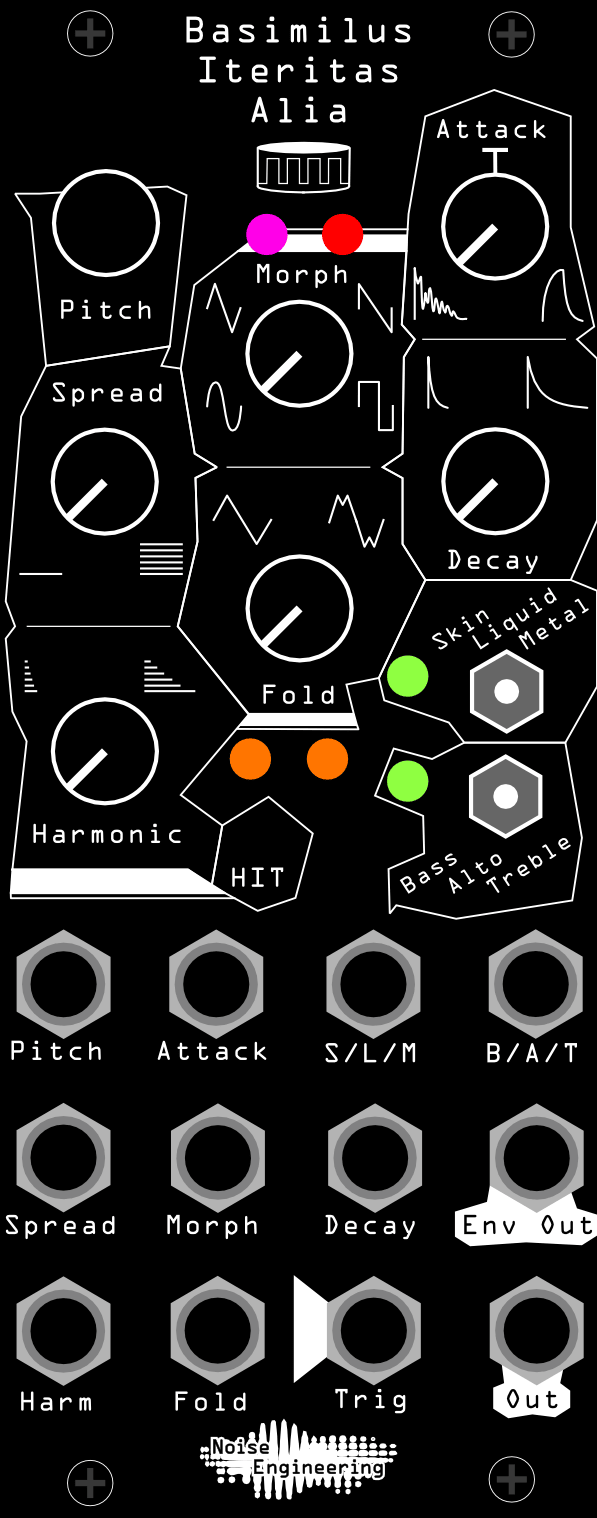
I use the Basimilus Iteritas Alter in my current live setup. It features on What We Are and What We Are Meant to Be from our latest album and a track called Kai Dao from our new EP Call to the Void. This last track is a bit of an anomaly compared to our other music as it’s completely written and performed on synths—a combination of modular with some extra bass from the Moog Grandmother—which is something we’ve never done before. I don’t for a minute think we’ll head down the road of an all-electronic sound for the band, the acoustic instruments are an integral part of the band’s identity, but I do think we’ll continue to use electronic elements in the future as it has been so liberating and inspiring, allowing us to really say with more clarity than ever what we want to say with our music.
Back in the early days of the band it felt like there were so many new techniques and things to try with the acoustic instruments and, while we haven’t reached a limit with those, it does feel like we’ve explored a huge amount with that setup. Now it feels like we’re at that exciting early stage with the electronic elements. They’ve found their place within the band’s sound but there’s a ton of room for exploration.
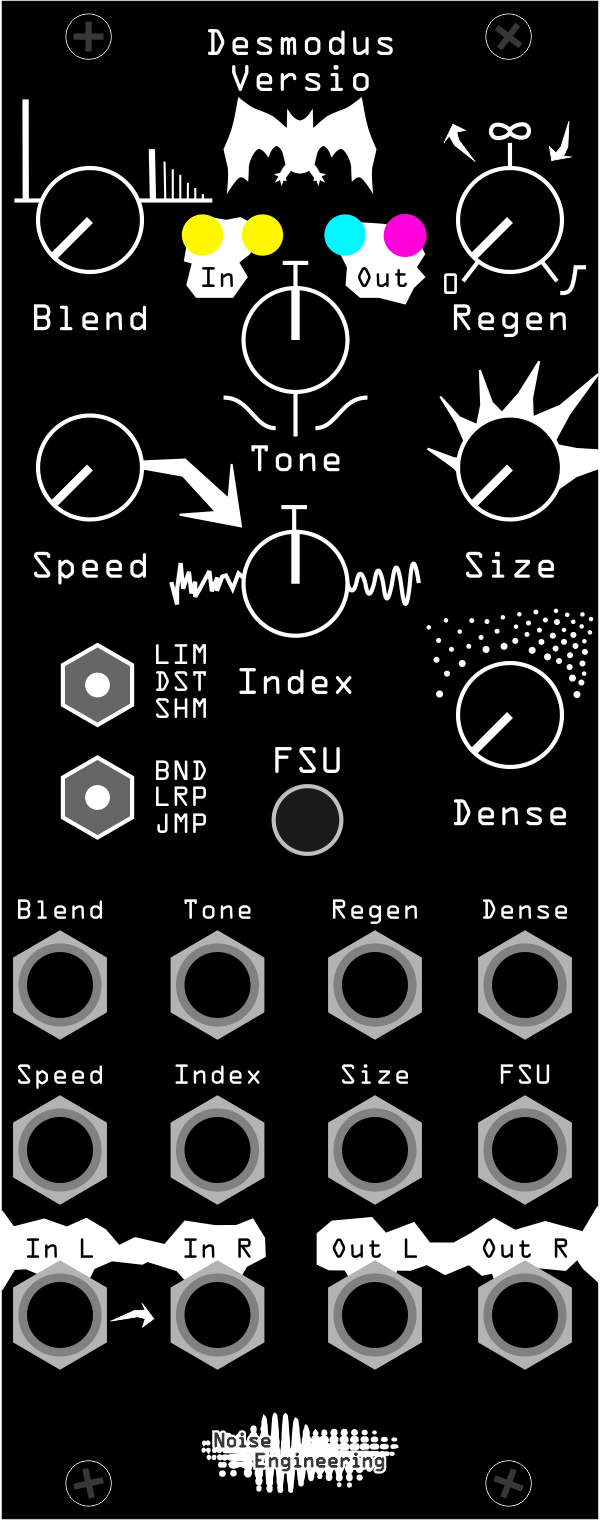
I’m trying to avoid expanding the setup with anything new (although I’m pretty sure the Alia series and Granulita Versio will be absorbed into the rig sometime soon) and instead am looking forward to pushing what I can do with the current setup. I’m particularly excited about trying more melodic and percussive ideas with the BIA and seeing how it feels to play this module from a keyboard alongside the piano and also incorporating it into Jon’s kit sound and triggering it from the drums.
Where can people find your work?
Search for GoGo Penguin on all the usual streaming platforms plus you can find live dates and news about new releases at gogopenguin.co.uk